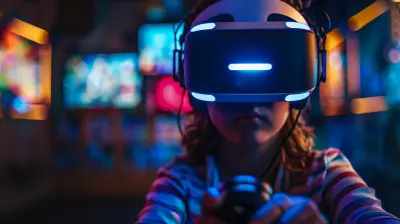
When Game Trailers Go Too Far: Overpromise vs. Reality
17 March 2026
Let’s be honest—there’s nothing quite like the hype of a good video game trailer. The music swells, the action explodes on screen, characters crack one-liners like they're auditioning for Hollywood, and for a moment, we get sucked into a new world that promises endless fun. But what happens when it’s all smoke and mirrors? What happens when the finished game doesn’t just fall short—but nose-dives?
Welcome to the tricky world of overhyped game trailers. In this deep-dive, we're tearing off the cinematic veneer to talk about when game trailers go too far, overpromise big, and leave gamers clinging to dashed hopes and refund receipts.
The Power of Hype in Gaming
Game trailers are like movie trailers on steroids. They're built to stir emotions, ignite conversations, and most importantly—open wallets.Think about the last time you saw a bombastic E3 trailer. There's a reason your jaw dropped. Trailers are carefully crafted with a cocktail of slick visuals, catchy dialogue, high-octane music, and just enough mystery to keep us guessing. It’s marketing magic.
But here’s the kicker: Not all trailers are an honest preview of the final product. And in the gaming world, where pre-orders drive early sales and revenue, developers and publishers have mastered the art of building colossal hype—even when the game can’t support it.
Smoke and Mirrors: How Trailers Overpromise
So how do these trailers mislead us? It’s not always an outright lie, but rather a clever display of smoke and mirrors. Here’s what to look out for:1. CGI Cinematics Masquerading as Gameplay
We've all been there. A trailer starts playing with jaw-dropping visuals—fireballs exploding, characters parkouring off buildings, monsters roaring like Dolby surround sound is in your room. You think, "This gameplay looks insane!" Only to find a small disclaimer in the corner: “Not actual gameplay.”Translation? You’ve just been baited with CGI candy.
2. Vertical Slices That Lie
“Vertical slice” is dev talk for a polished segment of the game used for demos. It’s the best foot-forward version, often with boosted textures, scripted events, and one-off assets made just to sell the moment. The rest of the game? Not quite at that level.Games like Watch Dogs and Aliens: Colonial Marines got torched over this. Their trailers promised a next-gen revolution, but the real game looked like it went back a generation—or two.
3. Fake Multiplayer Interaction
One of the worst offenders? Forced multiplayer dialogue.You’ve probably seen it: a trailer letting you hear players "communicating" during co-op missions. It sounds like a squad of elite operatives on a mission, perfectly synced, no one yelling over each other or going rogue. Spoiler alert: It's scripted voice acting, not actual player comms. In reality, it’s chaos and teabagging.
This fake camaraderie sets expectations that real multiplayer experiences often can’t match.

Notable Offenders: When Overhype Burned Bright… and Fast
Let’s call out some big titles that took the art of overpromising and turned it into a cautionary tale.🕹️ No Man’s Sky – The Redemption Arc
When No Man’s Sky was first shown, the promise was massive: infinite planets, seamless space travel, alien ecosystems you could explore forever. The trailer was a space geek’s dream.At launch? The galaxies were mostly empty, the interaction shallow, and those space battles? M.I.A.
But credit where it's due—Hello Games went into overdrive post-launch, dropping update after update. Today, No Man’s Sky is a much better game, but it had to crawl through a PR hellhole to get there.
🕹️ Cyberpunk 2077 – Glitch in the Hype Machine
Few games have had a pre-launch pipeline as explosive as Cyberpunk 2077. Keanu Reeves showed up. The trailers looked like a sci-fi masterpiece. But when it dropped?Bugs. Crashes. Unplayable on older consoles. Entire quest chains breaking. The final product was a shadow of the trailer’s promise.
CD Projekt Red has since patched a lot, but the damage was done. The gap between trailer and reality was so wide, Sony even pulled the game from its digital store for a while.
🕹️ Aliens: Colonial Marines – A Trailer Horror Story
The trailer for Aliens: Colonial Marines was so good it could’ve been a movie. Tense atmosphere, smart AI enemies, and stunning lighting made it look like the definitive Alien game.But when players booted it up, it looked… nothing like the trailer. The AI were so dumb, you could run past them. The visuals were downgraded. The tension? Gone.
Turns out some of the demo footage wasn’t even based on real gameplay. Lawsuits followed. Enough said.
The Psychology Behind the Hype
Why do we keep falling for these over-the-top trailers?Simple: It’s the psychology of anticipation. Humans love the idea of what could be. Trailers sell us on potential, not the final product. It's like swiping right on someone’s profile based entirely on their best selfie. Then meeting them and realizing those photos were from five years ago—and Snapchat-filtered.
Developers and publishers know this. They build anticipation knowing it’s easier to sell a dream than a reality. And when early pre-orders pour in, the financial pressure to actually deliver fades just a bit.
Can We Really Blame the Developers?
Here’s a hot take: sometimes, it’s not entirely the devs' fault.Game development is messy. Features get cut. Budgets shrink. Deadlines loom. Marketing teams often work independently from the development team, building trailers from early builds or prototype assets that may never make it into the finished game.
That doesn’t excuse it—but it gives some perspective. The real villain? The disconnect between marketing and what the development team can realistically execute.
What Gamers Can Do to Protect Themselves
It’s tempting to dive headfirst into the next hyped-up AAA title. But if you’ve been burned before, it helps to be a little more cautious.✅ Avoid Preorders
Unless you're 100% certain (which is rare), skip the pre-order button. Early reviews and gameplay footage often tell a different story.✅ Wait for Real Gameplay Footage
Don’t trust cinematic trailers. Wait for raw, unedited gameplay—preferably from independent creators or streamers you trust.✅ Watch Out for Disclaimers
“Not actual gameplay.” “In-engine footage.” “Alpha build.” These small print notes tell you that what you're seeing might not represent the final product.✅ Read Between the Lines
If a trailer is leaning heavily into flashy visuals and sweeping camera shots but shows no UI, no actual controller input, and no HUD—it’s probably cinematic smoke.Should Trailers Be More Regulated?
This is where things get a little controversial.Some gamers argue trailers should be held to the same standard as product advertising. If a car ad showed features that didn’t exist in the final vehicle, you bet there’d be legal trouble. In gaming? Not so much.
A few lawsuits have popped up over misleading trailers, but overall, there’s little accountability. Maybe it's time that changed.
When Trailers Get It Right
Let’s not be all doom and gloom. Some trailers strike the perfect balance between hype and honesty.Games like The Witcher 3, God of War (2018), and Red Dead Redemption 2 all showed off actual gameplay, environments, and story beats that ended up reflecting the real experience. The result? Immense trust and fan loyalty.
Honest marketing might not break the internet like overly cinematic trailers, but it builds something far more valuable: long-term credibility.
Final Thoughts: The Cost of Overhype
When game trailers go too far, it doesn’t just lead to disappointment—it erodes trust. For every flashy trailer that overpromises and underdelivers, there's a growing legion of gamers who approach the next one with an eye-roll and a skeptical click.Studios need to remember: We’re not just pixels on a screen. We’re people. And trust, once broken, is hard to win back.
So next time you're watching a trailer that looks too good to be true—pause, squint, and ask yourself: is this the dream, or just another well-dressed lie?
all images in this post were generated using AI tools
Category:
Game TrailersAuthor:

Jack McKinstry
Discussion
rate this article
2 comments
Maverick McGowan
Great read! It’s so true—game trailers can be like a first date, full of promise, but reality often serves up a different dish. Here’s to hoping for more matches!
March 19, 2026 at 3:32 AM
Jack McKinstry
Thank you! I love that analogy—game trailers really do set high expectations. Here’s to hoping for more games that deliver on their promise!
Noora Reilly
Loved this article! It's so true how trailers can set our expectations soaring. Let's celebrate the fun surprises games bring, regardless!
March 18, 2026 at 5:15 AM
Jack McKinstry
I'm glad you enjoyed it! Trailers really know how to hype things up, don't they? It's all about the joy of discovering what a game really has to offer. Thanks for reading!