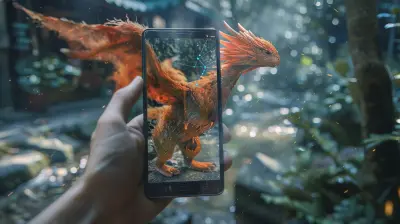
How AR Games Are Leveraging Artificial Intelligence
18 April 2026
Augmented Reality (AR) and Artificial Intelligence (AI) are two of the most exciting technologies reshaping the way we interact with digital content. You’ve probably heard of AR games like Pokémon GO, but did you ever stop to think about how much smarter and more dynamic these experiences have become lately? That’s AI at work—quietly running under the hood, making things more real, more personal, and… let’s be honest, more addictive.
In this guide, we’re going to take a deep dive into how AR games are leveraging artificial intelligence to push boundaries, blur lines between real and virtual, and make gaming insanely immersive. So grab your gear and let’s venture into the fascinating intersection of AR and AI in gaming.
What Is AR and AI in Simple Terms?
Before we dive into the details, let’s break it down.- Augmented Reality (AR) is when digital elements—like images, animations, or data—are overlaid on the physical world. Think of Instagram filters or those AR measuring apps.
- Artificial Intelligence (AI) is all about machines being smart—learning from data, making decisions, predicting stuff. Basically, AI makes technology feel more “human.”
Now, blend these two, and what do you get? A digital playground that reacts to how you move, what you say, and how you play—in real-time.
Why AR Games Are So Addictive
Ever wondered why AR games stay in your head even after you’ve put your phone down? It’s because they're no longer just games. They’re experiences. AI brings intelligence to the mix, making those experiences feel personal.When you fire up an AR game, it doesn't just serve the same content to everyone. AI makes sure your experience is yours, adapting gameplay to your preferences, surroundings, and skill level.
Smart NPCs: AI’s Magic in AR
One of the coolest ways AI is changing AR games? NPCs.Non-Player Characters (NPCs) used to be pretty basic. They followed scripts, walked in loops, and repeated the same lines. Boring, right? But now, with AI, they learn, adapt, and react differently based on how you interact with them.
Imagine an AR zombie survival game. One zombie might charge at you aggressively, while another might try to outsmart you by circling around. That’s not just code—that’s AI making decisions.
AI-powered NPCs in AR environments:
- Learn from your behavior
- Change difficulty levels in real-time
- Offer unique dialogues based on past interactions
This keeps players on their toes and transforms ordinary gameplay into a dynamic story.
Real-World Environments Made Smarter
AR is already about the real world. But AI takes it to the next level by understanding the world better.Let’s unpack that.
AI algorithms analyze your surroundings using your phone’s camera and sensors. They don’t just detect a flat surface—they can understand whether it’s a floor, a table, a street, or even a face.
Here’s what that means in AR gaming:
- Enemies might spawn behind real-world objects for surprise attacks
- Game elements behave differently depending on the terrain
- Weather and lighting in your environment affect gameplay
Think about AR games that change based on actual weather conditions. If it starts raining where you are, maybe a thunderstorm rolls into your virtual world too. That’s immersive AF.
Location-Based AI Adaptation
Location-based AR games are the bread and butter of mobile AR. But AI makes them smarter.When you walk around in a game like Pokémon GO or The Walking Dead: Our World, the game’s not just tracking your GPS—it’s also using AI to analyze foot traffic data, popular landmarks, and even local events.
Now imagine a game that deploys rare items near places you've never visited to encourage exploration. Or changes enemy spawns depending on how crowded a place is. That level of personalization makes players feel seen and keeps them coming back.
Speech and Gesture Recognition
AR combined with AI is also changing how we control games.Instead of just tapping your screen, how about talking to the game? Or using your hands?
AI-driven speech and gesture recognition lets you interact with the game world naturally. Say “Open Sesame” and a virtual door opens. Raise your hand and a shield appears. This not only feels futuristic, but it's also super immersive.
And here's the kicker—AI learns how you speak or move. So, the more you play, the better it gets at recognizing your voice commands or hand gestures. It’s like your game is learning you.
AI-Driven Personalization in AR Games
Here’s where things get really wild—hyper-personalization.AI collects data on how you play: which paths you take, how long you play, what items you use most, and even when you’re most active. Then it tweaks things behind the scenes to keep you engaged.
Some personalization tricks include:
- Tailored difficulty levels
- Customized rewards
- Unique storylines based on past decisions
This kind of one-on-one interaction wasn’t possible with traditional game engines. But thanks to AI, no two players have the exact same AR experience. It’s like the game is your own little universe.
The Future: AR Games That Think Ahead
Imagine an AR game that not only responds to your actions but also predicts them. Sounds like sci-fi, right? Not anymore.Predictive AI can analyze your habits and make educated guesses about your next move. This turns AR games into living, breathing experiences.
Picture this: You’ve been playing an AR puzzle game for a week. Every time you hit a certain type of puzzle, you struggle. The game notices this and starts tweaking future puzzles to help you improve gradually—without even telling you.
That’s not just smart. It’s human-like.
Ethical Concerns: Where Do We Draw the Line?
Let’s be real: As cool as this all sounds, it’s not all rainbows and unicorns.With great power comes great responsibility… and AI-powered AR games raise some serious ethical questions:
- How much of your personal data is being used?
- Are games becoming too addictive?
- Could AI-driven NPCs manipulate behavior?
Game developers need to balance innovation with responsibility. Transparency around AI usage, stricter data policies, and opt-in personalization can help keep things ethical.
How Indie Developers Can Get In On the Action
You don’t need a billion-dollar studio to start mixing AR and AI. Thanks to platforms like Unity, ARKit, and TensorFlow, even small indie developers are experimenting with AI in AR games.Some easy wins for devs looking to dip their toes in:
- Use AI for dynamic quest generation
- Implement basic voice commands with intent recognition
- Leverage machine learning for enemy behavior
The barrier to entry is lower than ever, and innovation often starts with the little guys.
Popular AR Games Already Using AI
Just in case you’re wondering, “Is this really happening already?”—yep, it is.Here are a few games that have started leveraging AI in truly fascinating ways:
Pokémon GO
- Uses AI to improve spawn algorithms and detect cheaters.- Real-world weather integration for more immersive gameplay.
Harry Potter: Wizards Unite
- AI helps personalize challenges and interactions.- Adjusts game mechanics based on real-time player activity.
Zombie Run
- Adaptive storytelling influenced by how fast and far you run.- AI creates branching storylines based on your choices.
Final Thoughts: Why AI Is the Secret Sauce of AR Games
So, why is everyone so excited about AI in AR gaming?Because it’s a match made in tech heaven. AR makes things look real. AI makes things feel real.
AI is the brain that lets AR games learn, adapt, and evolve. It creates personalized adventures, intuitive controls, and challenging enemies that don’t just chase you—they outsmart you.
We’re just scratching the surface of what’s possible. The future of gaming isn't just about better graphics or bigger maps, it’s about smarter, more meaningful interactions. Thanks to AI, AR games are no longer just games—they're living, responsive experiences.
If you're into AR gaming now, buckle up. The journey ahead is about to get crazy.
all images in this post were generated using AI tools
Category:
Augmented Reality GamesAuthor:

Jack McKinstry
Discussion
rate this article
2 comments
Cassian McNeil
Great read! It's exciting to see how AR games are harnessing AI for immersive experiences. The blend of technology and creativity opens up endless possibilities. Can’t wait to see what innovative adventures await us in this evolving landscape!
April 24, 2026 at 4:05 PM
Jack McKinstry
Thank you! I'm glad you enjoyed the article. The potential for AR and AI is indeed thrilling, and I can't wait to see where this journey takes us too!
Andrea Dorsey
AR games are transforming gameplay with AI, enhancing realism and immersion while creating personalized experiences that keep players engaged. Exciting times ahead!
April 20, 2026 at 3:01 AM
Jack McKinstry
Thank you for your insight! Indeed, the integration of AI in AR games is revolutionizing the gaming experience, making it more immersive and tailored to individual players. Exciting developments are on the horizon!