How to Design Mini-Games That Players Enjoy
25 May 2026
Ever get that warm, fuzzy feeling when you stumble upon a fun little side game inside a bigger video game? You know, like playing Gwent in The Witcher 3 or blitzing through hacking puzzles in BioShock. Mini-games are those unexpected treats that spice up the main course. They can add excitement, break up monotony, and even become iconic on their own.
But here's the million-dollar question—how do you actually design mini-games that players enjoy? Not just tolerate or skip through, but genuinely look forward to?
Well, buckle up, because we’re diving headfirst into the quirky, tricky world of mini-game design. By the end of this article, you'll walk away with a toolbox full of ideas, tips, and golden rules that'll help you craft mini-games people love.
What’s A Mini-Game, Really?
Before we go building one, let’s just make sure we’re on the same page.A mini-game is a smaller, self-contained game that exists within a larger game. Think of it as the mini donut that somehow found its way into your regular dozen—unexpected, delightful, and often unforgettable. It might only last a few seconds or minutes, but when done right, it can leave a lasting impact.
Mini-games can be:
- Optional or required
- Skill-based, chance-based, or puzzle-oriented
- One-off or repeatable
- Story-driven or purely mechanical
The best part? They give players a breather from the main gameplay loop. But for that breather to be refreshing, not frustrating, the design has to be spot on.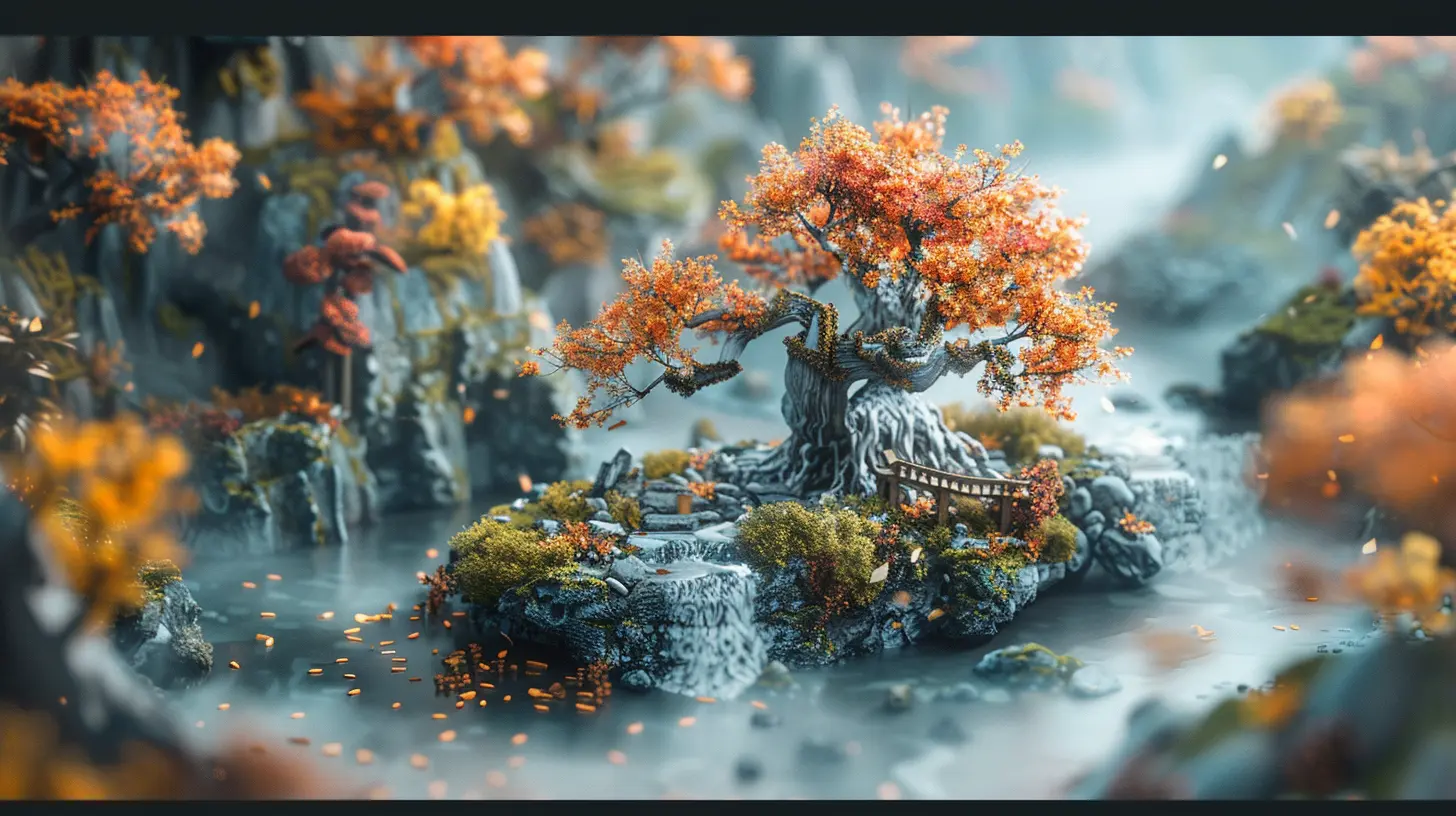
Why Bother with Mini-Games?
You might be thinking, "Why add extra work to my game design?"Well, here's the thing. Mini-games can massively boost player engagement. They offer:
- Variety – Breaking up the core gameplay keeps things feeling fresh
- Replayability – Some players will come back just to play the mini-game again
- World-building – Like playing arcade games in a futuristic RPG, they make the world feel alive
- Skill-building – Introduce mechanics in a more relaxed environment
- Pure fun – Sometimes, they’re just dang entertaining
And who doesn’t want their game to be more entertaining?
Step-by-Step: How to Design Mini-Games That Players Enjoy
Alright, let's get into the meat and potatoes. Here's how you can design mini-games that your players won’t just play—they’ll love them.1. Know Your Core Game (Like, Really Know It)
Before crafting mini-games, you have to be crystal clear on what your main game is all about. Your mini-game should either complement, contrast, or cleverly twist the core loop.If your main game is a fast-paced FPS, a fishing mini-game might feel out of place... unless you frame it humorously. But a shooting range time challenge? Now that fits like a glove.
Ask Yourself:
- Does this mini-game fit the world and tone of my main game?
- Is it a refreshing break or an annoying detour?
- Would it still make sense if the player stumbles upon it hours into the gameplay?
Mini-games need context. They shouldn’t feel like an out-of-nowhere alien invasion unless that’s your whole thing.
2. Keep It Simple, Silly (The K.I.S.S. Rule)
Here’s the truth: mini-games are usually side dishes, not the main meal. Don’t overcomplicate them. You want players to jump in and get it within seconds.What Simplicity Looks Like:
- Clear objective: “Catch as many fish as you can in 60 seconds.”
- Intuitive controls: Reuse existing inputs where possible
- Minimal tutorials: Let the gameplay teach the rules
Remember, friction kills fun. If a mini-game feels like homework, no one's going to play it twice.
3. Reward Players—Even If They Fail
What’s the point of a mini-game if you get nothing out of it?Even a small sprinkle of XP, a cosmetic item, or a funny dialogue can make the effort feel worthwhile. And if players lose? Give them something anyway. A clever failure animation, a punny NPC quip—anything that turns “failure” into “fun.”
It’s not about winning or losing, it’s about feeling something meaningful either way.
4. Tie It to the Game's World
Mini-games shine brightest when they feel like a natural part of the game world.Imagine playing darts in a medieval tavern, or cracking a safe as a cyber-thief in a neon city. When mini-games echo the tone, setting, and flavor of your game’s universe, they don’t feel like add-ons—they feel like experiences.
Pro tip: Adding lore, character banter, or in-universe stakes can make even the simplest mini-game feel much richer.
5. Add Just Enough Challenge
Nobody likes a cakewalk that’s too easy to care about. At the same time, few players want to rage-quit because of a side activity.The key? Find that sweet spot of challenge:
- Start easy, ramp slowly
- Add complexity for repeat playthroughs
- Let high scores or time trials cater to competitive players
Challenge = Engagement, but too much challenge = frustration. You want that Goldilocks balance.
6. Make It Replayable (Optional, But Powerful)
Good designs make players play your mini-game once. Great designs make them play it again and again.You can sprinkle in:
- Leaderboards
- Unlockables or rare loot
- Score-based challenges
- Easter eggs that only show up after multiple plays
Replayable mini-games often become fan favorites. Don't be surprised if some players stop progressing the main story just to max out their high score.
7. Add Visual and Auditory Feedback
Don’t underestimate the power of juicy feedback. When a mini-game feels good to play, people come back for more.- Add satisfying sound effects
- Use big, bold visuals for success/failure
- Include particle effects, animations, or quirky NPC reactions
It’s like icing on a cake. Players may not say, “Wow, that ping sound was satisfying!”—but they’ll feel it deep in their gamer soul.
8. Steal Like an Artist (But Make It Yours)
Let’s be honest. Most mini-game ideas are remixable.You’ve seen rhythm games, memory puzzles, whack-a-mole mechanics, and timed button mashers. And that’s okay!
You can borrow familiar formats as long as you put your own twist on them:
- Add narrative context
- Flip the rules
- Introduce quirky mechanics
Take inspiration from classics but leave your unique fingerprint on the design.
9. Test It Like Crazy
Just because you think your mini-game is fun doesn’t mean it actually is. You need other people—ideally folks unfamiliar with your game—to try it out.Watch their reactions. Are they confused? Do they laugh? Do they want "just one more go"?
Iterate based on:
- What makes players smile
- Where they get stuck
- What parts get ignored
A mini-game is only as good as the fun it delivers. Feedback is your best friend here.
10. Don’t Force It
Last but not least—don’t make your mini-game mandatory unless it’s amazing. Seriously.There’s nothing worse than a clunky, required puzzle interrupting your gameplay flow. Keep mini-games optional, or make them brief and meaningful if they’re essential to the story.
When people choose to play your mini-game, that’s how you know you’ve nailed it.
Examples of Mini-Games That Hit the Mark
Let’s take a quick look at a few mini-game legends and figure out what makes them tick.? Gwent in The Witcher 3
- Why it works: Immersive lore, deep mechanics, fits the world- Bonus: Became so popular it got its own full release
? The Arcade Games in Yakuza
- Why it works: Nostalgic, varied, and hilarious- Bonus: Spot-on recreations of real SEGA titles
⛏️ Mining in Stardew Valley
- Why it works: Blends resource gathering with combat/puzzle elements- Bonus: Randomness and loot keep it engaging
⛳ Golf in GTA V
- Why it works: A full game within a game, surprisingly robust- Bonus: Feels like a vacation from crime, literally
Each one shows a different flavor of mini-game success. But all of them share the same DNA: fun, fitting, and feedback-rich.
Final Thoughts (A.K.A. Your Call to Action)
Designing mini-games is kind of like baking cookies for a party. They’re not the main event, but if they’re good, people will talk about them for days.If you can keep your mini-game simple, rewarding, thematic, and fun to repeat, you’re already ahead of the pack. Mix in juicy feedback, a dash of challenge, and a sprinkle of player freedom—and boom, you’ve got a mini-masterpiece.
So, go on, give your players a delightful detour. Whether it’s playing cards with goblins or racing snails for treasure, that mini-game could just be the highlight of someone's playthrough.
Let’s make ‘em smile.
all images in this post were generated using AI tools
Category:
Game Content CreationAuthor:

Jack McKinstry
Discussion
rate this article
2 comments
Candice King
Mini-games can be the secret ingredient that transforms an ordinary experience into something unforgettable. The challenge lies in balancing simplicity and engagement. What if the key to player enjoyment is hidden in unexpected mechanics? Dive deep and discover what truly captivates your audience...
August 21, 2026 at 3:37 AM
Gabriel McGhee
Great insights on mini-game design! Can't wait to try these techniques out.
June 1, 2026 at 3:12 AM
Jack McKinstry
Thanks for the kind words! I'm excited for you to try them out. Happy designing!